How to Find Hidden Moisture Before It Becomes a Mold Problem
Water has a way of creeping into places you never think to check. Behind a kitchen cabinet, under a basement floor, inside a wall cavity, by the time you see the stain or smell the musty air, mold has already taken hold. I have spent years working on moisture control and mold remediation in Detroit, and I can tell you that the single most important skill a property owner can learn is how to find hidden moisture early. It saves money, protects your health, and prevents the kind of structural damage that turns a small leak into a major restoration project.
Mold needs two things to thrive: a food source and moisture. The food is everywhere, drywall, wood, dust, even the paper facing on insulation. The moisture is the variable you can control. But you cannot control what you cannot see. That is why learning to find hidden moisture is not just a maintenance trick; it is a fundamental part of protecting indoor air quality and the long-term health of your home. Let me walk you through the signs, the tools, and the strategies that actually work.
The Places Water Hides
Most people assume a leak will announce itself. A dripping pipe, a wet ceiling, a puddle on the floor. But hidden water damage often develops slowly, in spots that never see direct sunlight or regular foot traffic. The most common hiding places I encounter include:
- Behind bathroom and kitchen walls where leaky pipes run through stud bays
- In crawl spaces where groundwater seeps through cracked foundations
- Under vinyl flooring or laminate that traps moisture between the surface and the subfloor
- Around window frames where condensation forms and runs down inside the wall cavity
- In attics where poor attic ventilation allows warm, humid air to condense on cold roof sheathing
Each of these spots can stay damp for months without showing a single visible watermark. That is why relying on your eyes alone is not enough. You need to develop a systematic approach to find hidden moisture before it causes real trouble.
Tools That Do the Work
Over the years I have learned that the best moisture detectives are not human senses but simple, affordable instruments. A moisture meter is the first tool I reach for. It uses pins or a pinless sensor to measure the amount of water in wood, drywall, or masonry. I have walked into basements that felt bone-dry and watched the meter spike at 40% moisture content near the base of a wall. That reading tells you there is a problem behind the surface, even if the paint looks fine.

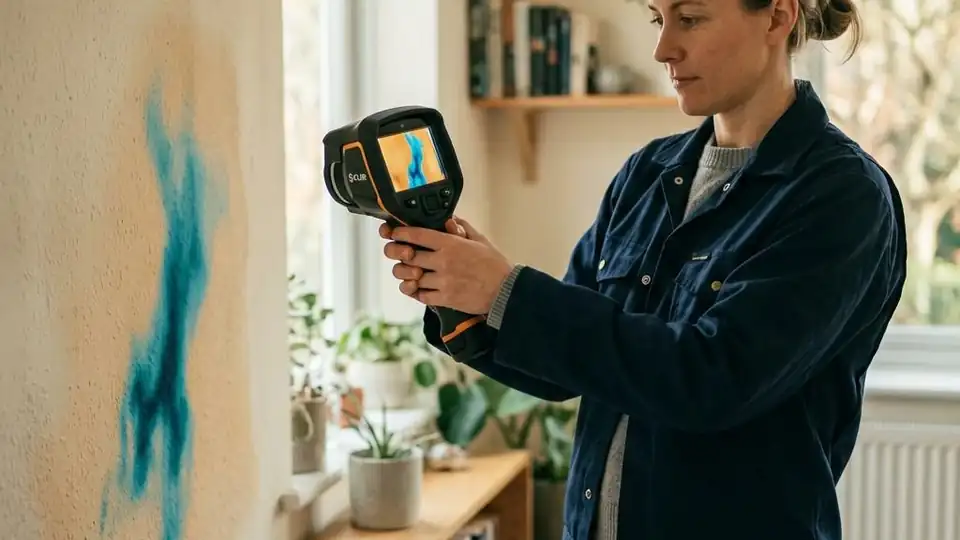
A thermal imaging camera is another game-changer. It detects temperature differences that often indicate damp areas. Wet materials hold heat differently than dry ones, so a cold spot on a wall or ceiling can point directly to hidden moisture. I remember a job in a Detroit duplex where the owner swore there was no leak. We ran a thermal scan and found a cold stripe running down an interior wall. When we opened it up, we found a slow drip from a corroded pipe that had been saturating the insulation for weeks. The camera saved us from tearing out half the house.
A hygrometer measures humidity levels in the air, which helps you understand whether your environment is encouraging condensation. If a room consistently reads above 60% relative humidity, moisture is going to settle on cool surfaces and soak into porous materials. Pair that with a dehumidifier and you can stop problems before they start.
Reading the Signs
Tools are only as good as the person using them. You also need to know what to look for without any instrument at all. Peeling paint or wallpaper is often the first clue. If the paint bubbles or the wallpaper edges curl, moisture is pushing from behind. Discoloration on drywall, especially a yellow or brown tint, usually signals past or present water entry. A musty smell is your nose doing what a moisture meter does: detecting microbial growth that only happens when moisture levels stay high for days.
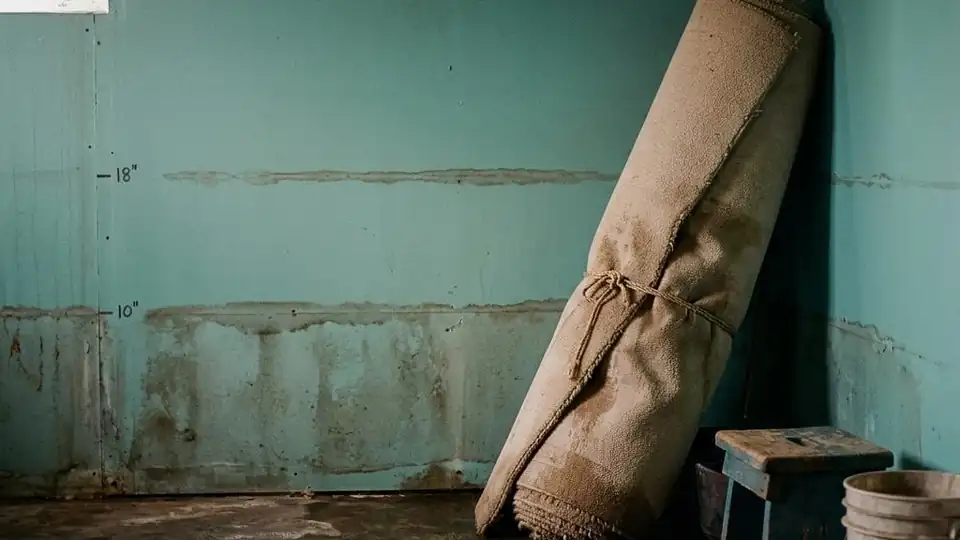
One of the trickiest situations I deal with is drywall moisture that wicks up from the floor. A basement flood might be pumped out and the carpet dried, but the drywall often soaks up water like a straw. If you do not cut and replace the bottom foot of drywall, mold will grow inside the wall cavity. That is why after any flood restoration job, I always use a moisture meter to check the drywall at multiple heights. If the reading stays high above the baseboard, the wall needs to come out.
Basement and Crawl Space Challenges
Basements and crawl spaces are the most common sources of hidden moisture in this region. Detroit homes built before 1950 often have fieldstone foundations that weep water during heavy rain. Without proper basement waterproofing, groundwater pushes through the walls and evaporates into the air, raising humidity levels and creating the perfect environment for mold spores to settle and grow.
I have seen crawl spaces where the dirt floor had no vapor barrier. The soil itself was releasing moisture into the air, and that moisture was condensing on the cold floor joists above. The result was rot, mold, and eventually sagging floors in the living room above. Installing a vapor barrier over the dirt and insulating the crawl space walls can make a dramatic difference. But you have to find hidden moisture first to know where to focus your efforts.
Structural Drying and Remediation
Once you locate the moisture, the next step is structural drying. This is not the same as wiping up a spill. Structural drying means using air movers, dehumidifiers, and sometimes heat to pull moisture out of building materials slowly and evenly. Rushing it can cause warping, cracking, or trapped moisture that leads to mold later. I always follow EPA guidelines for mold remediation, which recommend drying affected areas within 24 to 48 hours to prevent mold growth. If the materials stay wet longer than that, you are looking at a mold problem, not just a moisture problem.
A HEPA filter vacuum is essential during the cleanup phase. It captures mold spores that become airborne when you disturb contaminated materials. Without it, you risk spreading spores throughout the house. That is why professional mold remediation is not just about cleaning the visible mold. It is about containing and removing the spores so they do not recolonize.
Preventive Habits
Prevention is cheaper than remediation every time. A few simple habits can help you find hidden moisture before it becomes visible. Check your basement after every heavy rain. Run a dehumidifier in areas that feel damp. Use a hygrometer to monitor humidity levels and keep them below 50% in summer. Improve attic ventilation to prevent condensation in winter. Seal leaky pipes as soon as you notice them, not when they start dripping on your stored boxes.
One homeowner I worked with had a chronic mold smell in his finished basement. He had run a dehumidifier for years but could not get rid of the odor. When I came in, I used a moisture meter to check the drywall and found high readings near the floor. We pulled the baseboard and discovered that the previous owner had finished the basement directly over a concrete slab with no vapor barrier. Moisture was wicking up through the concrete and into the drywall. The fix was not a bigger dehumidifier; it was removing the lower drywall, applying a vapor barrier, and reinstalling with a gap between the drywall and the slab. That solved the problem permanently.
When to Call a Professional
Some moisture problems are simple. A leaky faucet, a clogged gutter, a cracked window seal. You can handle those yourself. But when you find hidden moisture in areas that involve structural elements, electrical systems, or potential mold growth, it is time to call someone who does this work full time. Mold remediation is not just about cleaning. It involves containment, air filtration, proper disposal, and sometimes removing and replacing building materials. Doing it wrong can disperse mold spores throughout the house and make the problem worse.
If you smell something musty, if you see peeling paint in a corner that stays dry to the touch, if your basement feels damp even after running a dehumidifier for a week, those are signs that you need to find hidden moisture with the right tools and expertise. A professional can use thermal imaging cameras, moisture meters, and hygrometers to pinpoint the source and recommend the right fix. They can also help with humidity control, basement waterproofing, and long-term strategies to keep your home dry.
Water is patient. It will find the smallest crack, the tiniest gap, the weakest seal. But you can be patient too. By learning to find hidden moisture early, you save yourself the headache, the expense, and the health risks of a full-blown mold infestation. Check your crawl space. Look at your attic. Run a meter over your basement walls. It takes ten minutes and it can save you thousands of dollars and a lot of frustration. That is the kind of maintenance that pays for itself.
Whether you own a century-old brick house in Detroit or a newer suburban build, moisture will test your property. The difference between a minor repair and a major restoration often comes down to how quickly you catch the problem. Learn to use the tools. Pay attention to the signs. And when in doubt, bring in someone who knows how to find hidden moisture in every corner of a building. Your indoor air quality and your peace of mind depend on it.